Old Loyalties
Caught between Mom and Dad: how it follows you into love
By M. R. Alder · Updated October 2, 2026 · 11 min read
 Lived-experience review by Krasimira Trifonova
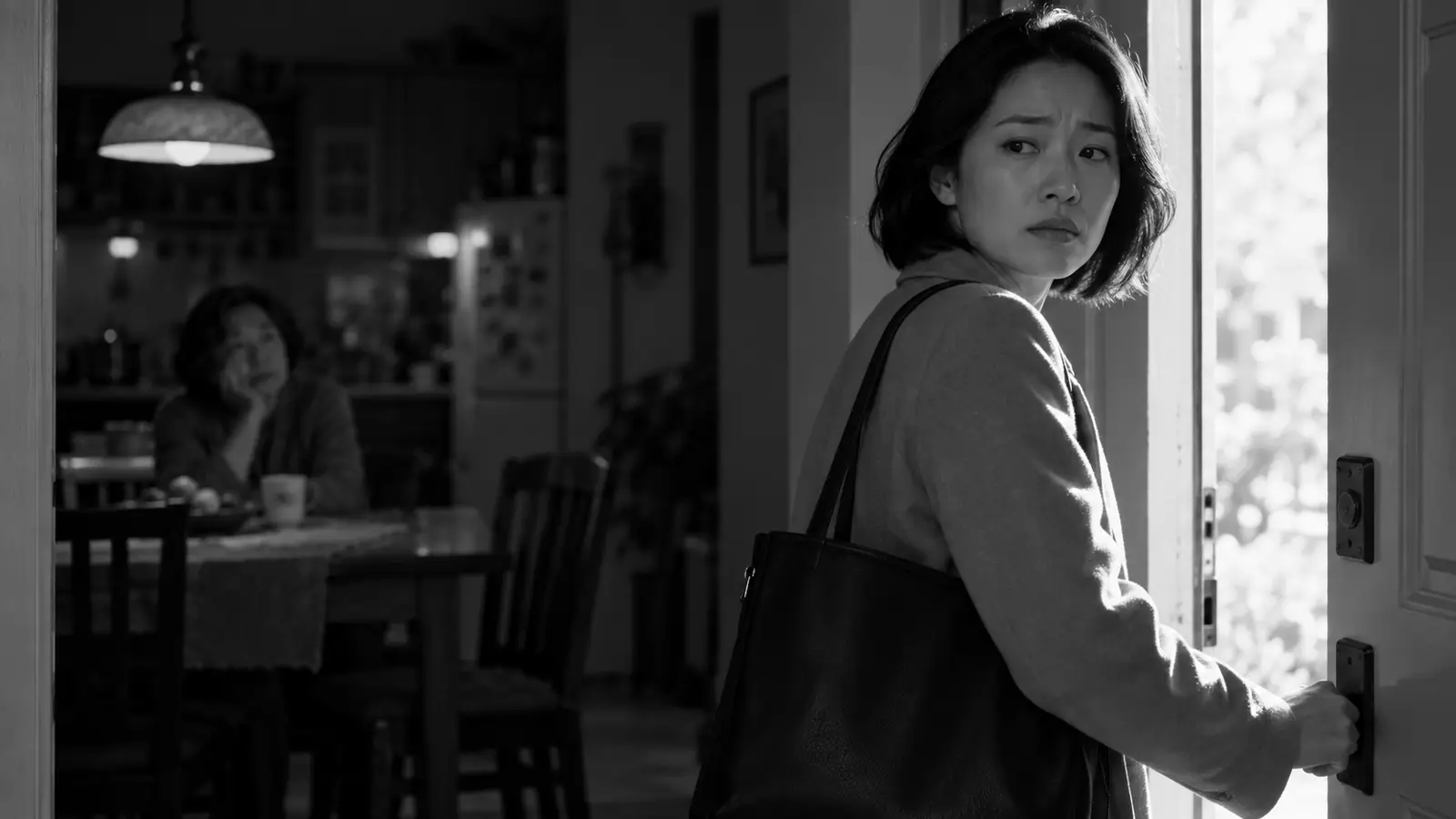
Some children grow up with parents who fight. Others grow up with parents who don't fight — they just stop talking, or talk through the kids. And some grow up shuttling between two homes, carefully editing what they say in each, learning which stories are safe to tell where.
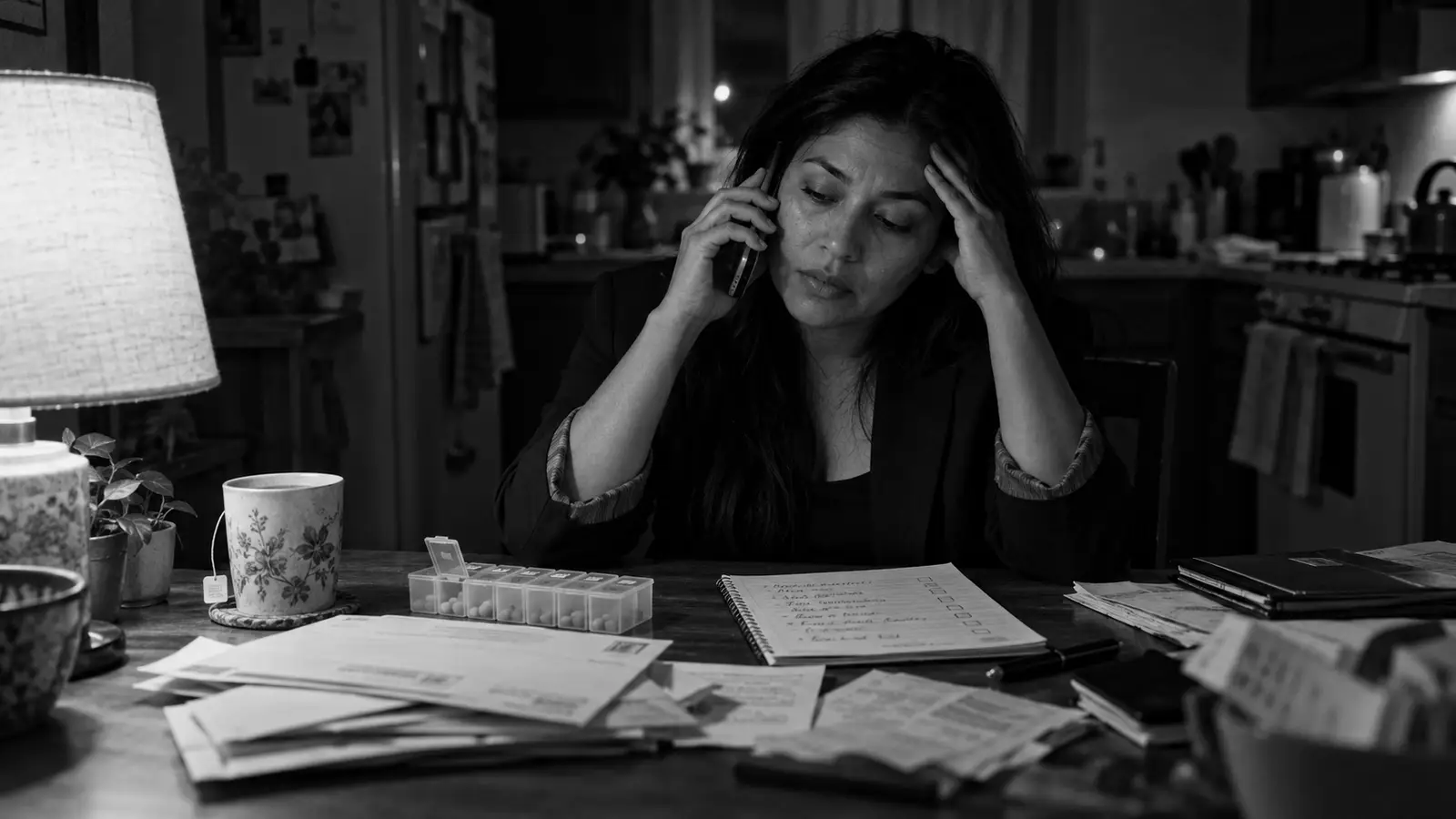
If that was you, you probably became very good at something most children shouldn't have to learn: keeping the peace between two people you love.
That skill doesn't stay in childhood. It follows women into their friendships, their workplaces and — most powerfully — into their love lives. This article explores what being caught between parents looks like, why it leaves such a deep mark, how it shows up in adult relationships, and how to step out of the middle without abandoning anyone.
What researchers call "feeling caught"
In the early 1990s, researchers Christy Buchanan, Eleanor Maccoby and Sanford Dornbusch studied adolescents in divorced families and found that what mattered wasn't only whether parents were in conflict, but whether the teenagers felt caught in it — used as messengers, asked to take sides, or made to hide information from one parent. Teens who felt caught tended to report more stress and adjustment difficulties.
Other research on interparental conflict, including work by John Grych and Frank Fincham, has emphasized something similar: children are affected not just by conflict itself, but by how they understand it — whether they feel threatened by it, blame themselves for it, or feel responsible for fixing it.
Family therapists have a related word: triangulation, a concept associated with psychiatrist Murray Bowen. When two people in a family can't manage the tension between them, they often pull in a third person to absorb it. In many families, that third person is a child.
The common thread is this: it isn't the conflict alone that does the damage. It's being pulled into it.
The many ways children get caught
Being "in the middle" doesn't always look dramatic. Many women don't recognize it at first because it felt normal. You may have been caught if, as a child, you:
- Carried messages between your parents ("Tell your father he's late with the check.")
- Heard one parent complain about the other — and felt you had to agree.
- Felt guilty for enjoying time with one parent because it might hurt the other.
- Became a confidant, hearing about your parents' marriage, affairs, money or loneliness — things no child should have to hold.
- Were asked to choose, openly or subtly: where to spend holidays, which parent to live with, whose version of events to believe.
- Kept secrets for one parent from the other.
- Acted as a buffer — stepping in to calm things down, changing the subject, making a joke when tension rose.
- Learned to read the room the second you walked in the door.
Some children are caught in loud households full of yelling. Others are caught in quiet ones full of silence, cold looks and unspoken resentment. Both can leave the same imprint.
After divorce
Divorce can make this pattern more visible. A child may move between two homes with two different versions of the story, two sets of feelings to protect, and the constant risk of saying the wrong thing in the wrong place. Divorce itself isn't the problem — many children of divorce do very well, especially when parents cooperate. The harm tends to come from conflict that continues after the separation and from children being used as go-betweens.
In intact families
Many women caught in the middle grew up with parents who stayed together. Sometimes they stayed "for the kids," and the kids felt the weight of that. A daughter can become her mother's emotional partner in an unhappy marriage, or her father's ally against a critical mother, without anyone ever naming it.
The skills you developed — and their cost
Children in the middle develop remarkable abilities. They become:
- Peacemakers — sensing tension early and defusing it.
- Translators — explaining each parent to the other.
- Emotional detectives — reading faces, tones and silences with precision.
- Diplomats — saying the right thing to the right person.
- Little adults — mature, responsible, self-sufficient.
These skills are real, and many women carry them into successful careers and deep friendships. But they come with a cost. A child who spends her energy managing her parents' emotions often has little left for her own. Her needs go underground. Her opinions become negotiable. Her sense of safety depends on everyone else being okay.
Those skills don't disappear at 18. They move into our love lives.
How it shows up in your relationships
You avoid conflict at almost any cost
Disagreement feels dangerous, because at home it was. So you swallow what you need to say, smooth things over, agree when you don't — until it comes out all at once, or never. Partners may describe you as "easygoing," while inside you feel unheard.
You feel responsible for his mood
If he's upset, you assume it's your job to fix it. His calm becomes your safety. You may notice yourself scanning his face, adjusting your behavior, or apologizing for things that weren't your fault.
You struggle to take your own side
You're excellent at understanding everyone's perspective. Standing firmly in your own feels selfish, even disloyal. In arguments, you may argue his side for him before you've finished saying yours.
You feel torn between your partner and your family
Holidays, weddings, big decisions, even small plans can trigger that old feeling of having to choose — and of someone getting hurt whatever you do. You may feel like a bridge with traffic going both ways.
You're drawn to partners who need managing
If you grew up as the family's emotional regulator, you may feel most at home with a partner who has big moods, big problems or big conflicts with others — someone who, once again, needs you in the middle. (See the parentified daughter for more on this pattern.)
You fear repeating your parents' relationship
Many women from high-conflict homes carry a deep fear of ending up like their parents. Some avoid commitment altogether. Others choose partners who seem like the opposite of their parents, only to discover the same dynamics in a new form.
You keep secrets to keep the peace
Old habits of editing information can turn into hiding small things from a partner — not out of deception, but out of an old belief that the truth causes fights.
The loyalty underneath
Being caught between parents often leaves behind what family therapist Ivan Boszormenyi-Nagy called an invisible loyalty: a quiet commitment to one parent's version of the story, or to keeping everyone together no matter what it costs you.
These loyalties can sound like:
- "If I'm close to Dad, I'm betraying Mom."
- "I have to stay available in case they need me."
- "My job is to make sure nobody gets hurt."
- "Men are like Dad. Mom told me so."
This isn't a flaw. It was love, doing the best it could in a situation no child should have to manage. But what kept the peace at nine can keep you small at thirty-five. (Read more in invisible loyalty: when being happy feels like betrayal.)
A composite story
The following is an illustrative composite, not a real client.
Nadia is 34. Her parents divorced when she was eight, and the conflict continued for years afterward. She spent weekdays with her mother, who often cried about her father, and weekends with her father, who rarely mentioned her mother except to criticize her. Nadia learned to say almost nothing about one home in the other.
As an adult, Nadia was the calm one in every relationship. Her partners described her as wonderfully low-drama. But when she wanted something different — more time together, a change of plans, an apology — she couldn't say it. She would go quiet, then feel resentful, then end things suddenly when the pressure became too much.
The turning point came during a holiday argument about whose family to visit. Nadia found herself shaking, unable to speak. "It felt like being eight again," she said later, "standing in the driveway between two cars."
Recognizing that feeling changed something. She began practicing small, direct statements of what she wanted — first with friends, then with her partner. It felt dangerous at first. Over time, it felt like freedom.
Stepping out of the middle
Stepping out doesn't mean cutting anyone off or deciding who was right. It means gently handing back what was never yours to carry — and learning to stand in your own place.
1. Name the role you played
Were you the messenger, the confidant, the buffer, the ally, the diplomat? Write it down. Naming the role helps you notice when you slip back into it with a partner, a friend or your family today.
2. Notice whose feelings you're managing
In any tense moment, ask: Am I paying attention to my own feelings right now — or am I managing someone else's? Just noticing creates a pause.
3. Practice small, honest statements
Start low-stakes: "I'd rather stay in tonight." "I actually disagree." "That didn't feel good to me." Each one teaches your nervous system that honesty doesn't automatically lead to disaster.
4. Hand back what isn't yours
Think of one thing you still carry for a parent — a resentment, a secret, a worry, an old grievance against the other parent. Then imagine, as vividly as you can, placing it back in their hands with respect:
"This belongs to you. I love you, and I'm putting it down."
You might feel relief. You might feel guilt. Both are normal. Guilt, here, is often just the feeling of breaking an old rule.
5. Set boundaries with parents who still pull you in
Some parents keep using adult children as go-betweens. You're allowed to step out:
"I love you both, and I'm not going to pass messages anymore. Please talk to each other directly." "I don't want to hear about Dad's new relationship. Can we talk about something else?"
Expect some pushback. Old systems resist change. Stay kind, and stay consistent.
6. Let your partner be a partner, not a third parent
In your own relationship, notice if you're bringing a triangle into it: venting to your mother about your partner, or to your partner about your mother, instead of speaking directly. Direct conversations feel riskier, but they build real intimacy.
7. Learn that conflict can be safe
For many women from high-conflict homes, the most healing experience is a disagreement that ends well: two people stay calm, listen, and find their way back to each other. If you've never seen that modeled, you may need to experience it a few times before your body believes it. Choose partners and friends who can fight fair.
8. Get support when it's deep
If the conflict you grew up in included violence, addiction or abuse, being "caught in the middle" may have been only part of a larger trauma. A licensed therapist can help you work through it safely.
What healthy conflict can look like
If you grew up in the middle, you may never have seen two people disagree and stay close. It can help to know what you're aiming for. In healthy relationships, conflict tends to look like this:
- Both people can say what they feel without fear of punishment or withdrawal.
- The issue stays the issue. An argument about dishes isn't turned into an attack on character.
- Nobody is pulled in as a referee. Problems between two people are worked out between those two people.
- Breaks are allowed. "I need twenty minutes to calm down, then let's continue" is respected.
- There's repair. Someone reaches out afterward — an apology, a touch, a "we're okay."
You won't do this perfectly. Nobody does. But each time a disagreement ends in repair rather than silence or explosion, something old in you learns that love and honesty can exist together.
Questions to reflect on
Take these one at a time, perhaps in a journal:
- What role did I play between my parents? Who gave it to me?
- What did I learn conflict means? What did I learn about my own needs?
- In my current relationships, where do I still play that role?
- What's one thing I still carry for a parent that I'm ready to put down?
- What would it look like to take my own side, just once this week?
Holidays, weddings and big family moments
Many women find that the pattern resurfaces most strongly around family events, when both parents — or both sides of a family — are in the same room or competing for time. A few ideas that help:
- Decide in advance what you're willing to do, and communicate it calmly.
- Plan short visits instead of long ones if tension is high.
- Have a support person — a partner or friend you can check in with.
- Give yourself permission not to fix everything. It isn't your job to make the day perfect for everyone.
- Plan time to decompress afterward. Old roles are tiring, even when you don't play them anymore.
What it is not
A few clarifications:
- It isn't blaming your parents. Most parents in conflict are struggling themselves and don't realize the impact on their children.
- It isn't saying conflict is always harmful. Children who see parents disagree respectfully and repair often learn something valuable.
- It isn't permanent. The role you learned can be unlearned.
Where this fits in ROOTS
Recognizing the "middle child" role is part of Step 3 of the ROOTS Method, Old loyalties. Releasing it is Step 4, Tender release — honoring your parents without living inside their story. Many women who grew up in the middle recognize themselves in the quiz result The Bridge.
Curious which pattern shapes your love life most? Take the free love root quiz. It takes about five minutes. And if you'd like to talk through a specific family situation, Rowan, our AI coach, can help you find words for it.
From Roots to Love offers coaching and education, not therapy. If your family history includes abuse, violence or ongoing danger, please reach out to a licensed professional or see our crisis resources.
Frequently asked questions
What does it mean to be caught between your parents?
It describes a child who ends up in the middle of her parents’ conflict: carrying messages, taking sides, comforting one parent about the other, or hiding love for one parent to protect the other. Researchers often call it feeling caught between parents; family therapists call it triangulation.
How does being caught between parents affect adult relationships?
Many women who grew up in the middle avoid conflict at almost any cost, feel responsible for a partner’s mood, struggle to take their own side, and feel torn between their partner and their family. These are old survival skills, not personal flaws.
Is it my fault that I took sides as a child?
No. Children in conflict-heavy homes do what they can to keep the peace and stay close to both parents. Seeing the pattern as an adult is about understanding it, not blaming yourself or your parents.
How do I stop feeling stuck in the middle?
Start by noticing when you are managing other people’s feelings instead of your own, practice small honest statements of what you need, and gently hand back what was never yours to carry. If the conflict involved abuse, a licensed therapist can help.